Walk into any Puerto Rican kitchen and you’ll find a jar of vibrant green sofrito in the freezer. Visit an Argentine asado and chimichurri sits on every table. These two sauces represent fundamentally different approaches to building flavor, yet home cooks often confuse them or wonder which one they need.
I learned this distinction the hard way when I drizzled chimichurri into a pot of rice, expecting the deep savory backbone my grandmother’s sofrito always delivered. The result was edible but wrong. That moment taught me something essential: sofrito vs chimichurri isn’t a competition. They serve entirely different purposes in your kitchen.
What Is Sofrito? The Flavor Base of Caribbean and Latin Cooking
Sofrito is a cooked aromatic paste that forms the foundation of countless Caribbean and Latin American dishes. You don’t serve it at the table. You build everything else on top of it.
Think of sofrito as the invisible architecture of a meal. When you taste perfectly seasoned arroz con pollo or deeply flavorful habichuelas, sofrito created that complexity long before anything else hit the pan.
Origins and Cultural Significance
The word comes from the Catalan “sofregit,” meaning “lightly fried.” The technique dates back to 1324, appearing in the Libre de Sent Soví, a medieval Catalan cookbook. Spanish colonizers brought this method to the Caribbean, where it evolved into something distinctly different from its European ancestor.
| Region | Key Characteristics | Signature Ingredients |
|---|---|---|
| Spain | Tomato-forward, mild, sweet | Tomatoes, onions, olive oil, pimentón |
| Puerto Rico | Green, herbaceous, aromatic | Culantro, ajíces dulces, cilantro, peppers |
| Cuba | Savory, meat-enhanced | Cubanelle peppers, ham, roasted garlic |
| Dominican Republic | Acidic, liquid consistency | Vinegar, water, tomato juice |
Each Caribbean island developed its own version using local ingredients. Puerto Rican families guard their sofrito recipe variations like heirlooms, passing techniques through generations. Sweet y Salado
Traditional Puerto Rican Sofrito Ingredients
Puerto Rican sofrito stands apart because of culantro, also called recao. This spiny-leafed herb looks nothing like cilantro but delivers ten times the punch. Combined with ajíces dulces, those tiny sweet peppers unique to the Caribbean, it creates an unmistakable flavor profile.
- Culantro (recao): The backbone herb, more pungent than cilantro
- Ajíces dulces: Small sweet peppers providing signature aroma
- Cilantro: Adds freshness and brightness
- Cubanelle or bell peppers: Body and mild sweetness
- White or yellow onions: Savory foundation
- Garlic: Usually 25-30 cloves per batch
The green color of Puerto Rican sofrito surprises people expecting the red, tomato-based Spanish version. That verdant hue comes from the heavy concentration of fresh herbs processed together.
Regional Variations (Spanish, Cuban, Dominican)
Spanish sofrito keeps things simple. Onions, garlic, tomatoes, and olive oil cook low and slow until everything melds into a sweet, mild paste. Saffron and smoked paprika often appear in traditional preparations.
Cuban sofrito adds cured ham or bacon for depth. The roasted garlic and cubanelle peppers create a more savory, less herbaceous profile than Puerto Rican versions.
Dominican cooks call theirs sazón or wasakaka. The liquid consistency and vinegar addition makes it distinct. That acidity helps preserve it in tropical heat while adding brightness to rice and stews. Cocina Republic
What Is Chimichurri? Argentina’s Iconic Herb Sauce
Chimichurri is a raw herb sauce served fresh as a condiment or marinade. You add it after cooking, not during. The bright acidity and fresh herbs cut through rich grilled meats.
Where sofrito disappears into dishes, chimichurri announces itself boldly. That vibrant green drizzle on a perfectly charred steak exists specifically to be noticed.
The History Behind Chimichurri
The origins remain debated, but chimichurri emerged alongside Argentina’s asado tradition. Abundant beef required a sauce that could complement smoky, fatty meat without competing. Fresh herbs, sharp vinegar, and fruity olive oil achieved exactly that balance.
Argentine and Uruguayan gauchos relied on simple, portable ingredients. Parsley grew easily. Vinegar preserved. Olive oil carried flavors. The sauce became inseparable from the ritual of grilling meat over open flame.
Essential Chimichurri Ingredients
Traditional chimichurri recipe preparations center on parsley, not cilantro. Many modern versions add cilantro, but purists consider it a departure from authenticity.
- Flat-leaf parsley: 1 cup finely chopped, the dominant herb
- Garlic: 4 cloves minced
- Extra virgin olive oil: 1/2 cup
- Red wine vinegar: 2-4 tablespoons
- Dried oregano: 1 teaspoon
- Red pepper flakes: Heat to taste
- Coarse salt and black pepper
The proper ratio maintains balance: roughly three parts oil to one part vinegar. Too much acid overwhelms the herbs. Too little makes the sauce oily and flat. Olivia’s Cuisine
Red vs Green Chimichurri
Chimichurri verde represents the classic preparation. Fresh, bright, herbaceous. The green color comes purely from the parsley and any cilantro added.
Chimichurri rojo incorporates roasted red peppers and smoked paprika (pimentón ahumado). The result is deeper, smokier, with a slight sweetness that pairs exceptionally well with smoked meats. Some versions add more chili for noticeable heat.
| Variety | Color Source | Flavor Profile | Best Pairing |
|---|---|---|---|
| Verde | Fresh parsley | Bright, tangy, herbaceous | Grilled beef, seafood, vegetables |
| Rojo | Roasted peppers, paprika | Smoky, deeper, slightly sweet | Smoked meats, pork, grilled chicken |
Both versions remain raw. You never cook chimichurri. The fresh, unheated herbs and the sharp vinegar define its character. The Family Food Kitchen
Sofrito vs Chimichurri: Key Differences at a Glance
The fundamental distinction is simple. Sofrito builds flavor during cooking. Chimichurri adds flavor after cooking.
Everything else flows from this core difference. Ingredients, texture, storage, cultural context. Understanding this one principle tells you when to reach for each sauce.
| Dimension | Sofrito | Chimichurri |
|---|---|---|
| Origin | Puerto Rico, Caribbean, Spain | Argentina, Uruguay |
| Primary Use | Cooking base blended into dishes | Finishing sauce or marinade |
| When Added | Beginning of cooking | After cooking or for marinating |
| Preparation | Blended, sometimes cooked | Raw, hand-chopped or processed |
| Texture | Smooth paste | Chunky, textured |
| Base Ingredients | Peppers, onions, garlic, herbs | Parsley, garlic, oil, vinegar |
| Shelf Life | 6 months frozen | 2-3 weeks refrigerated |
| Flavor Profile | Deep, savory, foundational | Bright, tangy, fresh |
Sofrito essentially disappears into your food, becoming part of its DNA. Chimichurri remains visible and distinct, a deliberate accent on the finished plate.
Ingredient Breakdown: What Goes Into Each Sauce
Both sauces rely on fresh ingredients, but they share almost nothing in common. Understanding what goes into each helps you shop smarter and substitute wisely.
Sofrito Ingredients and Substitutions
Authentic Puerto Rican sofrito requires some hunting. Ajíces dulces and culantro appear in Latin grocery stores but rarely in mainstream supermarkets.
Core Ingredients:
– Culantro (recao): 1/2 pound, about 6 bunches
– Cilantro: 1/3 pound, about 3 bunches
– Ajíces dulces: 1 pound, stems and seeds removed
– Cubanelle peppers: 1/2 pound
– White onions: 3 large
– Garlic: 3 heads, about 25 cloves
Substitution Guide:
– No culantro? Triple your cilantro quantity. The flavor won’t match exactly, but it works.
– No ajíces dulces? Bell peppers approximate the texture but miss the unique floral sweetness. Not recommended for purists.
– No cubanelle? Green or red bell peppers substitute acceptably.
Finding ajíces dulces matters most. These small, wrinkled peppers deliver an aroma that bell peppers simply cannot replicate. Check frozen sections in Caribbean markets if fresh aren’t available. Sense and Edibility
Chimichurri Ingredients and Substitutions
Chimichurri ingredients appear in any grocery store. No specialty shopping required.
Core Ingredients:
– Flat-leaf parsley: 1 cup finely chopped
– Garlic: 4 cloves minced
– Olive oil: 1/2 cup extra virgin
– Red wine vinegar: 3 tablespoons
– Dried oregano: 1 teaspoon
– Red pepper flakes: 1/2 teaspoon
– Salt: 1/2 teaspoon
Substitution Guide:
– Red wine vinegar alternative: White wine vinegar or lemon juice work, with slightly different results
– Fresh oregano: Use 1 tablespoon if substituting for dried
– Parsley alternative: Never substitute cilantro in traditional Argentine chimichurri. It becomes a different sauce entirely.
The accessibility of chimichurri ingredients explains its popularity beyond Argentina. Anyone can make authentic chimichurri with a standard grocery run.
How to Use Sofrito in Your Cooking
Sofrito goes into the pan first. Before proteins, before liquids, before everything else. You build your dish on its foundation.
Heat oil in your pot, add 2-3 tablespoons of sofrito, and let it sizzle until fragrant. That aromatic bloom signals readiness for the next ingredients.
Classic Dishes That Start with Sofrito
- Arroz con pollo: Sofrito creates the flavor base before adding rice and chicken
- Habichuelas guisadas: Beans simmer in sofrito-infused broth for hours
- Asopao: This soupy rice dish depends on sofrito for depth
- Pernil: Marinate pork shoulder with sofrito before roasting
- Caldo de pollo: Chicken soup gains complexity from the aromatics
Cooking Techniques for Maximum Flavor
The sautéing step matters enormously. Cooking sofrito in hot oil releases compounds that raw blending cannot achieve. Those flavors then infuse everything else in the pot.
| Dish Type | Sofrito Amount | Cooking Method |
|---|---|---|
| Rice (2 cups) | 1/4 to 1/3 cup | Sauté 2-3 minutes before adding liquid |
| Stews (6 servings) | 1/2 to 1 cup | Cook until fragrant, add with proteins |
| Beans (1 pound dried) | 1/2 cup | Add early, simmer throughout |
| Soups | 1/4 cup | Sauté as base, add broth after |
Do not skip the sautéing step and dump raw sofrito into simmering liquid. The texture and depth suffer noticeably. That initial fry develops flavors that passive simmering cannot replicate. Latina Mom Meals
How to Use Chimichurri in Your Cooking
Chimichurri works best at room temperature, drizzled over finished food. The contrast between warm meat and cool, tangy sauce creates the magic.
You can marinate proteins in chimichurri, but scrape off excess before grilling. The herbs and garlic burn over direct flame, turning bitter.
Best Proteins for Chimichurri
- Skirt steak: The classic pairing, char on the outside, pink inside
- Flank steak: Sliced thin against the grain, pooled in chimichurri
- Rib eye: Fat and acid create exceptional balance
- Grilled chicken: Thighs especially benefit from the brightness
- Grilled shrimp: Cook quickly, sauce generously
Creative Uses Beyond Grilled Meat
Chimichurri belongs on far more than steak. The sauce brightens anything that needs acidity and freshness.
- Roasted vegetables: Drizzle over charred cauliflower, peppers, or zucchini
- Crusty bread: Use as a dip instead of butter or olive oil
- Grain bowls: Stir into quinoa or farro for instant flavor
- Eggs: Spoon over fried or scrambled eggs
- Grilled fish: White fish especially welcomes the herbaceous punch
Let chimichurri rest at least 15 minutes before serving. The flavors need time to marry. Overnight refrigeration produces even better results, though freshness diminishes after a few days. Cafe Delites
Authentic Homemade Sofrito Recipe
This homemade sofrito yields approximately 5 cups. Frozen in ice cube trays, it provides months of flavor at your fingertips.
Ingredients
| Ingredient | Amount |
|---|---|
| Ajíces dulces | 1.5 lbs (15-20 peppers) |
| Culantro (recao) | 1 bundle |
| Cilantro | 2 bundles |
| Cubanelle peppers | 1 lb |
| Green bell pepper | 1 large |
| Garlic | 4 heads (25-30 cloves) |
| Yellow onions | 3 large |
| Olive oil | 2 tablespoons |
Step-by-Step Instructions
- Wash all produce thoroughly with diluted white vinegar
- Remove stems and seeds from all peppers
- Peel garlic cloves and onions completely
- Roughly chop everything into 1-inch pieces
- Working in batches, add vegetables to food processor
- Pulse 8-10 times until salsa-like consistency
- Add olive oil between batches if mixture sticks
- Combine all batches and pulse 10 more times
- Transfer to airtight containers or ice cube trays
Pro Tips for the Best Sofrito
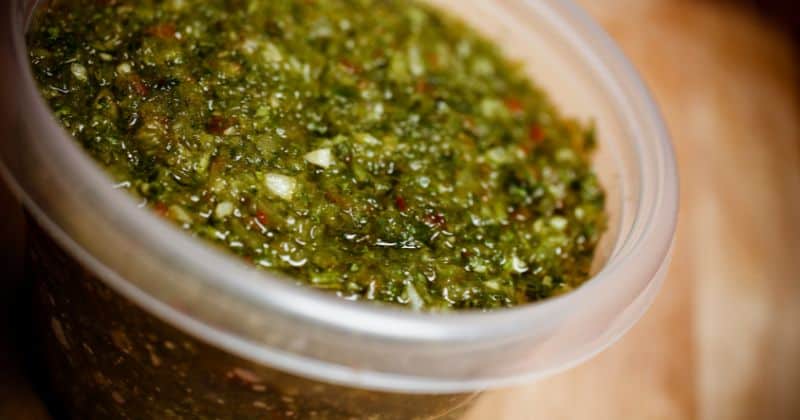
Do not over-process into a puree. You want visible texture, not baby food. The consistency should resemble chunky salsa or pesto.
If your food processor struggles, chop vegetables smaller before adding. Compact blenders like Nutribullet require even finer initial chopping.
Each ice cube holds approximately 2 tablespoons, the perfect amount for most recipes. Freeze solid, transfer to freezer bags, and label with the date. Kitchen Gidget
Classic Chimichurri Recipe
This traditional Argentine chimichurri takes 10 minutes to prepare. The resting time develops the complex flavors.
Ingredients
| Ingredient | Amount |
|---|---|
| Fresh flat-leaf parsley | 1 cup finely chopped |
| Garlic | 4 cloves minced |
| Extra virgin olive oil | 1/2 cup |
| Red wine vinegar | 3 tablespoons |
| Dried oregano | 1 teaspoon |
| Red pepper flakes | 1/2 teaspoon |
| Coarse salt | 1/2 teaspoon |
| Black pepper | 1/4 teaspoon |
Step-by-Step Instructions
- Rinse parsley and pat completely dry
- Remove leaves from stems, discard stems
- Finely chop parsley by hand (preferred) or pulse briefly in processor
- Combine parsley, minced garlic, oregano, and pepper flakes in bowl
- Add olive oil and vinegar, stir to combine
- Season with salt and pepper
- Let rest minimum 15 minutes, preferably 2 hours
- Taste and adjust seasoning before serving
Variations to Try
Red Chimichurri: Add 1/4 cup finely diced roasted red peppers and 1 teaspoon smoked paprika. Reduce parsley slightly if needed.
Cilantro Version: Replace half the parsley with fresh cilantro. Popular in modern kitchens but not traditional Argentine.
Extra Heat: Increase red pepper flakes to 1 tablespoon or add fresh minced chili pepper.
Hand-chopping produces superior texture. Food processors risk turning herbs to mush. If using a processor, pulse only 3-4 times and finish chopping any large pieces by hand. Foreign Fork
Storage and Preservation Tips
Both sauces store well with proper technique. Sofrito freezes beautifully. Chimichurri prefers refrigeration.
How to Store Sofrito
Refrigerated sofrito lasts up to 2 weeks in an airtight container. The strong aroma requires proper sealing unless you want your entire refrigerator smelling like garlic and peppers.
Freezing method:
1. Pour fresh sofrito into ice cube trays
2. Freeze solid, approximately 4 hours
3. Pop cubes into labeled freezer bags
4. Store up to 6 months
Each cube equals roughly 2 tablespoons. Drop frozen cubes directly into hot oil without thawing. They sizzle and bloom immediately.
Signs of spoilage include darkening color (from bright green to brown), foul smell, or visible mold. When in doubt, discard the batch and make fresh.
How to Store Chimichurri
Fresh chimichurri keeps 2-3 weeks refrigerated. The vinegar and salt act as natural preservatives. The flavor actually improves over the first few days as ingredients meld.
The olive oil solidifies when cold. This is normal. Let the jar sit at room temperature 15 minutes before serving to restore the liquid consistency.
Freezing chimichurri:
– Pour into ice cube trays
– Freeze solid and transfer to bags
– Thaw before using or add frozen to hot pan for cooked applications
Fresh herbs wilt after 3-4 days even when refrigerated. The sauce remains safe but loses vibrancy. For best flavor and color, use within the first week. Garden Betty
Chimifrito: The Best of Both Worlds
Chimifrito combines elements of both sauces into something new. It’s not traditional to any cuisine but offers interesting possibilities for creative cooks.
The concept merges sofrito’s cooked depth with chimichurri’s fresh brightness. You get aromatics that have developed through heat plus herbs that retain their raw vibrancy.
Quick Chimifrito Recipe:
| Ingredient | Amount |
|---|---|
| Prepared sofrito | 1/4 cup |
| Fresh parsley, chopped | 1/2 cup |
| Fresh cilantro, chopped | 1/4 cup |
| Olive oil | 1/4 cup |
| Red wine vinegar | 2 tablespoons |
| Red pepper flakes | 1/2 teaspoon |
Combine cooled sofrito with fresh herbs, oil, and vinegar. Let rest 15 minutes. Use as marinade for grilled meats or drizzle over finished dishes.
This hybrid works particularly well on grilled chicken. The sofrito adds savory depth while fresh herbs provide the bright finish. It bridges Caribbean and South American flavors in a single spoonful.
FAQ
Can I use sofrito as a finishing sauce like chimichurri?
Sofrito tastes raw and harsh when uncooked. The ingredients require heat to develop their flavors properly. Serve chimichurri fresh and cook sofrito into dishes for best results.
How long does homemade chimichurri last in the refrigerator?
Properly stored chimichurri keeps 2-3 weeks refrigerated. The vinegar and salt preserve it naturally. Flavor peaks around day 2-3 and slowly diminishes as herbs wilt.
What can I substitute for culantro in Puerto Rican sofrito?
Triple your cilantro quantity when culantro is unavailable. The flavor differs but provides similar herbaceous character. Check Latin grocery stores for fresh or frozen culantro before substituting.
Is chimichurri spicy?
Traditional chimichurri contains mild heat from red pepper flakes, not overwhelming spice. Adjust the quantity to your preference. Start with 1/4 teaspoon and increase gradually.
Can I freeze chimichurri like sofrito?
Chimichurri freezes adequately in ice cube trays for up to 3 months. The texture changes slightly upon thawing, making it better for cooked applications than fresh drizzling after freezing.
Why does my sofrito taste bitter?
Over-processing creates bitter flavors as cell walls break down excessively. Pulse briefly rather than blending continuously. Burnt garlic from high-heat sautéing also causes bitterness.
Do I need to cook chimichurri before serving?
Never cook chimichurri. The raw preparation defines its character. Heat destroys the fresh herb flavors and bright acidity that make chimichurri distinctive.
Can I make sofrito without ajíces dulces?
You can substitute bell peppers, but the result lacks authenticity. Ajíces dulces provide a unique sweet, floral aroma that bell peppers cannot replicate. Search frozen sections in Caribbean markets for acceptable alternatives.