How Much Sushi Rice Per Roll: The Complete Measurement Guide

How much sushi rice per roll depends on what you’re making, but most standard maki rolls need about 80-100 grams of cooked rice. Get this wrong and you’ll end up with rolls that burst at the seams or fall apart on the cutting board. This guide gives you exact measurements for every roll type, plus the batch calculations that make sushi night stress-free.

Quick Answer: Standard Sushi Rice Amounts Per Roll

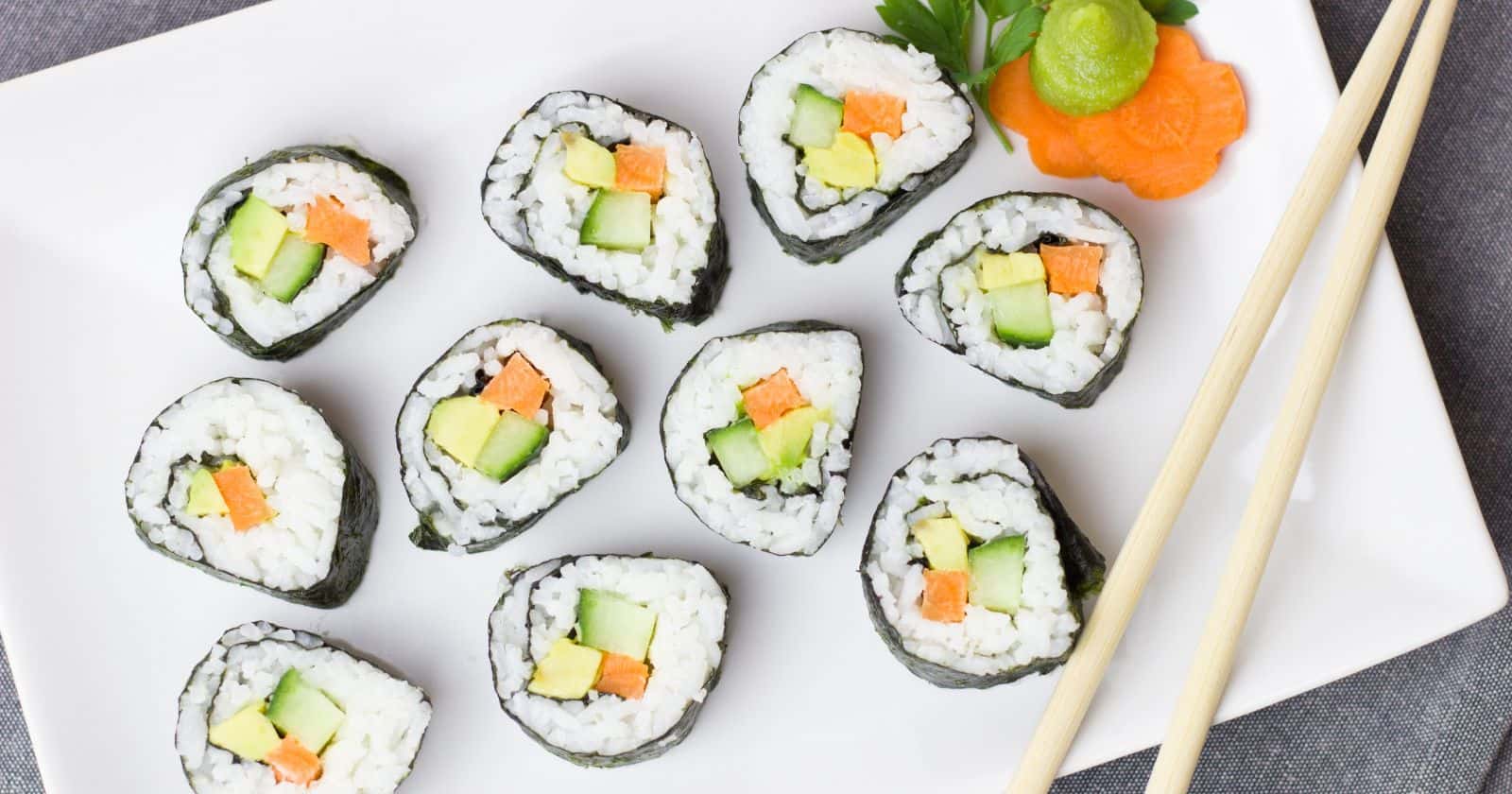
Measuring standard sushi rice portions for perfect sushi rolls with proper rice-to-nori ratio

A standard maki roll needs 80-100 grams (about 1/2 cup) of cooked sushi rice spread across a half sheet of nori. This baseline works for most beginner-friendly rolls and keeps the rice-to-filling ratio balanced.

Roll Type Cooked Rice Amount Volume Equivalent
Hosomaki (thin) 60-80g 1/3 cup
Standard Maki 80-100g 1/2 cup
Uramaki (inside-out) 100-120g 3/4 cup
Futomaki (thick) 150-250g 1 to 1⅔ cups
Temaki (hand roll) 60-70g 1/3 cup

These numbers assume you’re working with properly seasoned, room-temperature sushi rice. Too-warm rice makes nori soggy within seconds. Too-cold rice won’t spread evenly and creates lumpy rolls.

Sushi Rice Measurements by Roll Type

Chart showing sushi rice measurements for different roll types and portions

Different roll styles require different sushi rice measurements because diameter and construction method change everything. A thin cucumber roll and a loaded California roll are completely different animals.

Hosomaki (Thin Rolls)

Hosomaki needs the least rice at 60-80 grams per roll. These single-ingredient rolls wrap tightly around fillings like tuna, cucumber, or pickled radish.

The thin profile means you’re spreading rice across only half a nori sheet, leaving a 1-cm border for sealing. Overfill a hosomaki and the nori tears when you roll. The filling should be visible at both ends, not buried under rice.

Uramaki (Inside-Out Rolls)

Inside-out rolls like the California roll require 100-120 grams of rice because the rice forms the exterior layer. You’re covering the entire nori sheet before flipping it over to add fillings.

  • Spread rice edge-to-edge on the nori
  • Flip the sheet so rice faces down on your mat
  • Add fillings to the center of the exposed nori
  • The outer rice layer adds visual appeal and extra texture

This construction method means uramaki feel more substantial than hosomaki, even with similar filling amounts. The rice coating also allows for additions like sesame seeds or tobiko on the outside.

Futomaki (Thick Rolls)

Thick rolls demand 150-250 grams of rice to support multiple fillings without collapsing. Futomaki often contain five or more ingredients arranged in a specific pattern.

The extra rice serves a structural purpose here. Without enough rice to bind everything together, thick rolls become a jumbled mess when sliced. Just One Cookbook recommends using a full nori sheet and spreading rice more generously for futomaki than other roll types.

California Rolls and Specialty Rolls

California rolls fall into the uramaki category, using about 110 grams of rice per roll. The combination of crab, avocado, and cucumber needs adequate rice to maintain structure during cutting.

Specialty rolls with multiple proteins or sauces often push toward futomaki rice quantities. Dragon rolls, rainbow rolls, and other restaurant favorites typically use 120-150 grams. When in doubt, aim for the higher end if your roll contains more than three filling ingredients.

How to Measure Sushi Rice Accurately

Weight measurement beats volume every time for rice quantity per roll because rice density varies based on grain size, moisture content, and how tightly you pack your measuring cup.

By Weight (Most Accurate)

A kitchen scale eliminates guesswork entirely. Measure out your target grams directly onto plastic wrap or into a small bowl, then transfer to your nori sheet.

  • 50-60g uncooked rice yields roughly 100-120g cooked
  • One batch of 300g uncooked rice produces enough for 6-8 standard rolls
  • Digital scales with 1-gram precision cost under $15 and last years

The Breakthrough Sushi team tested identical volumes of short-grain rice and found weight differences of 5-10 grams per cup. Over multiple rolls, those small variations add up.

By Volume (Cup Measurements)

When scales aren’t available, use the Japanese rice measuring cup at 180ml capacity. Standard US cups measure 240ml, so adjust accordingly.

Measurement Japanese Cup US Cup
1 cup uncooked 180ml 3/4 cup
Cooked yield ~2.5 cups ~2 cups
Rolls produced 6-8 5-6

Level off your measuring cup with a knife or chopstick for consistency. Scooping directly from the bag and packing rice down introduces major variation between batches.

The Hand Portioning Method

Experienced sushi makers portion rice by feel, grabbing roughly golf-ball sized amounts for standard maki. This technique develops through repetition.

Start by weighing your rice portions for the first few batches. Pay attention to how each amount looks and feels in your hand. After making 50+ rolls, you’ll instinctively grab the right quantity without thinking. The traditional method works because properly prepared sushi rice has a consistent texture that becomes familiar with practice.

Sushi Party Planning: Batch Calculations Made Easy

The simplest formula for sushi party portions: 1 cup uncooked rice yields 3 cups cooked, which produces 6-8 standard rolls. Plan for 2 rolls per person as a baseline.

Rice Amounts for 2-4 People

1.5 cups uncooked rice (300g) handles a small gathering comfortably. This produces 4.5 cups of cooked rice, enough for 7-10 rolls depending on thickness.

  • 2 people eating sushi as a main course: 4-6 rolls
  • 4 people with appetizers: 8 rolls
  • Add 10% buffer for mistakes or seconds

Two people making sushi together will likely eat while rolling anyway. Account for the “quality control” samples that disappear before anything gets plated.

Rice Amounts for 6-10 People

Scale up to 3 cups uncooked rice (600g) for medium gatherings. This batch yields 9 cups cooked rice, translating to 12-16 rolls.

Guest Count Uncooked Rice Rolls Produced Per Person
6 guests 3 cups 12-14 2 rolls
8 guests 3.5 cups 14-16 2 rolls
10 guests 4 cups 16-20 2 rolls

Groups this size benefit from variety. Make half hosomaki (less rice per roll) and half uramaki to stretch your batch further while offering options.

Large Party Scaling (12+ Guests)

4+ cups uncooked rice (800g+) serves larger crowds. At this scale, consider making rice in batches rather than one massive pot.

  • 12 guests: 4 cups uncooked, 24-32 rolls
  • 16 guests: 5.5 cups uncooked, 32-40 rolls
  • 20 guests: 7 cups uncooked, 40-50 rolls

Aline Made recommends cooking rice in 2-cup batches for quality control. Larger quantities cook unevenly and cool at different rates, creating inconsistent texture throughout the batch.

Common Sushi Rice Mistakes and How to Avoid Them

Even perfect measurements won’t save rolls made with poorly prepared rice. These mistakes derail more homemade sushi than any other factor.

Using Too Much Rice

Overfilled rolls announce themselves immediately. The nori won’t close properly, rice squeezes out both ends during rolling, and cutting produces a mess of escaped grains.

Signs you’ve added too much rice:
– Bamboo mat won’t compress the roll into a cylinder
– Rice visible at the sealing edge before you finish rolling
– Roll diameter exceeds 2 inches for standard maki
– Filling gets lost in a sea of rice

The fix involves restraint, not technique. Measure your rice before spreading and leave that 1-2cm nori border completely clean. Never try to close an overfilled roll by force.

Using Too Little Rice

Underfilled rolls lack structural integrity. They feel floppy when lifted, gap between rice and nori, and collapse into pieces when sliced.

  • Loose rolls don’t hold fillings securely
  • Nori edges won’t seal because there’s nothing sticky to grip
  • Each slice produces filling avalanches
  • The ratio feels wrong when eating

Add rice incrementally if you’re unsure. Starting with too little and adding more takes seconds. Scraping off excess from an overspread sheet wastes rice and creates uneven thickness.

Incorrect Rice Consistency

Texture problems stem from cooking ratios and cooling methods, not portioning. But wrong-textured rice makes accurate portioning nearly impossible.

Problem Cause Solution
Too wet/sticky Excess water, insufficient cooling Spread on sheet pan, fan while cooling
Too dry/hard Not enough water, old rice Add 10% more water, use fresh rice
Mushy Overcooked, stirred while cooking Don’t lift lid during cooking, let rest 10 min
Grainy Undercooked, wrong rice variety Use Japanese short-grain only, extend cook time

The Make My Sushi team emphasizes that rice texture affects spreading behavior. Wet rice spreads too easily, leading to overfilled rolls. Dry rice clumps and creates uneven coverage.

Perfect Sushi Rice Recipe for Consistent Results

Consistent rice starts with consistent method. This recipe produces properly seasoned, spreadable sushi rice every time.

Rice Cooker Method

Use a 1:1.1 rice-to-water ratio by volume for rice cookers. Japanese short-grain rice needs slightly more water than the cooker’s standard lines indicate.

  • Rinse 2 cups rice until water runs mostly clear (5-6 rinses)
  • Soak for 30 minutes, then drain
  • Add rice to cooker with 2.2 cups water
  • Cook on sushi rice setting or standard white rice
  • Let rest 10 minutes after cooking completes

Rice cookers produce the most consistent results because temperature and timing stay constant. The sealed environment prevents evaporation variables that affect stovetop cooking.

Stovetop Method

Stovetop cooking requires more attention but produces identical results with practice.

  1. Rinse and soak rice as above
  2. Combine rice and water in heavy-bottomed pot
  3. Bring to boil uncovered over high heat
  4. Reduce to lowest heat, cover tightly
  5. Cook exactly 12 minutes without lifting lid
  6. Remove from heat, rest 10 minutes covered

Do not lift the lid during cooking or resting. Steam escape changes the final texture dramatically.

Seasoning Ratios

Season rice while still warm for best absorption. The standard ratio per 2 cups uncooked rice:

  • 4 tablespoons rice vinegar
  • 2 tablespoons sugar
  • 1 teaspoon salt

Heat vinegar mixture until sugar dissolves, then fold gently into rice using cutting motions. Avoid mashing or stirring, which breaks grains and creates paste. Cool rice to room temperature before rolling, fanning occasionally to speed the process. Rice temperature at rolling time affects nori texture more than any other factor.

Pro Tips: Getting Restaurant-Quality Results at Home

Small technique adjustments separate decent home sushi from restaurant-quality rolls. These details matter more as your skills progress.

Keep hands and tools wet throughout the rolling process. Sushi rice sticks aggressively to dry surfaces. Dip fingers in water mixed with a splash of rice vinegar before touching rice. Wet your knife between every cut.

Spread rice in one direction only, working from center to edges. Back-and-forth spreading compresses grains and creates dense patches. Use the back of a spoon or your fingers with light pressure.

Leave proper borders on your nori. For hosomaki and standard maki, leave 1-2cm at the top edge completely clear. This bare strip creates the seal when you finish rolling. Uramaki gets rice edge-to-edge because the nori ends up inside.

Control rice temperature by working in small batches. Keep your main rice container covered with a damp towel while rolling. Room temperature rice (around 70°F) spreads best and maintains proper stickiness without making nori soggy.

Don’t compress during rolling. Apply gentle, even pressure to shape the roll, not squeeze it. Over-compressed rice turns dense and gummy. The goal is a firm cylinder, not a packed log.

FAQ

How much uncooked rice do I need for one sushi roll?

About 25-35 grams of uncooked rice produces enough cooked rice for one standard maki roll. This accounts for water absorption during cooking, which roughly doubles the rice volume.

Why does my sushi rice stick to everything?

Your hands and tools need moisture barriers. Wet fingers with water containing a splash of rice vinegar before touching rice. Re-wet between each roll. Keep a bowl of this mixture nearby throughout your session.

How long does prepared sushi rice last?

Seasoned sushi rice stays usable for 3-4 hours at room temperature when covered with a damp cloth. Refrigeration hardens the rice and changes the texture permanently. Make only what you’ll use in one session.

What’s the difference between sushi rice and regular white rice?

Sushi rice uses Japanese short-grain varieties with higher starch content that creates necessary stickiness. Long-grain rice like jasmine or basmati won’t hold together in rolls regardless of how you prepare it.

How do I know if I’ve added the right amount of rice?

The rice layer should be thin enough to see nori color through it in spots. If the layer looks opaque white everywhere, you’ve added too much. For uramaki, the layer should be about 5mm thick and even.

Does rice amount change for vegetarian vs fish rolls?

Rice amounts stay consistent regardless of filling type. The roll style (hosomaki, uramaki, futomaki) determines rice quantity, not what goes inside. Adjust filling amounts instead if rolls feel unbalanced.

How many pieces does one roll produce?

One standard roll yields 6-8 pieces when cut properly. Use a sharp, wet knife and wipe the blade between cuts. Sawing motions crush the roll, so use single decisive strokes instead.

What ratio of filling to rice works best?

A 1:1 ratio by volume between rice and combined filling works well. This prevents rice-heavy rolls while ensuring enough structure to hold everything together.

Share your love
Bill Kalkumnerd
Bill Kalkumnerd

I am Bill, I am the Owner of HappySpicyHour, a website devoted to spicy food lovers like me. Ramen and Som-tum (Papaya Salad) are two of my favorite spicy dishes. Spicy food is more than a passion for me - it's my life! For more information about this site Click

Leave a Reply

Your email address will not be published. Required fields are marked *