Shellfish-Free Sushi: 15+ Safe Rolls and How to Order With Confidence

For anyone with a shellfish allergy, sushi menus feel like minefields. Nearly 2% of American adults live with shellfish allergies, making it the most common adult food allergy. This guide reveals exactly which sushi rolls contain zero shellfish, how to communicate with restaurant staff, and the hidden ingredients that catch most people off guard.

Understanding Shellfish in Sushi: What to Avoid

What sushi does not have shellfish depends on understanding two distinct categories: crustaceans and mollusks. Crustaceans include shrimp, crab, and lobster. Mollusks cover scallops, clams, and oysters. Both require strict avoidance.

Common Shellfish Ingredients in Sushi

The obvious offenders appear in menu names. Shrimp tempura rolls, spider rolls featuring soft-shell crab, and Boston rolls packed with crab meat all signal immediate danger. Ebi nigiri means shrimp. Hotate means scallop. Learning these Japanese terms protects you when English descriptions fall short.

Roll Name Shellfish Content Safe Alternative
Shrimp Tempura Roll Fried shrimp Vegetable tempura roll
Spider Roll Soft-shell crab Dragon roll with eel
Boston Roll Crab meat Philadelphia roll
Rainbow Roll Often includes shrimp Salmon rainbow roll (verify)
Dynamite Roll Shrimp and crab Spicy tuna roll

Hidden Shellfish Sources You Might Miss

Imitation crab fools many allergy sufferers into false security. While surimi starts as white fish (usually pollock), manufacturers frequently add crab extract or shellfish flavoring to achieve that signature taste. California rolls pose a gamble every single time.

Sauces create another invisible threat. Spicy mayo sometimes contains shellfish-derived ingredients. Eel sauce (unagi sauce) typically stays safe, but cross-contamination during preparation remains a concern. Fish roe rarely contains shellfish, though shared preparation surfaces introduce risk.

The American College of Allergy, Asthma & Immunology notes that crustaceans cause the majority of severe allergic reactions. Even trace amounts from shared cutting boards trigger responses in sensitive individuals. Never assume a sauce or topping stays shellfish-free without explicit confirmation.

Shellfish-Free Sushi Rolls You Can Safely Enjoy

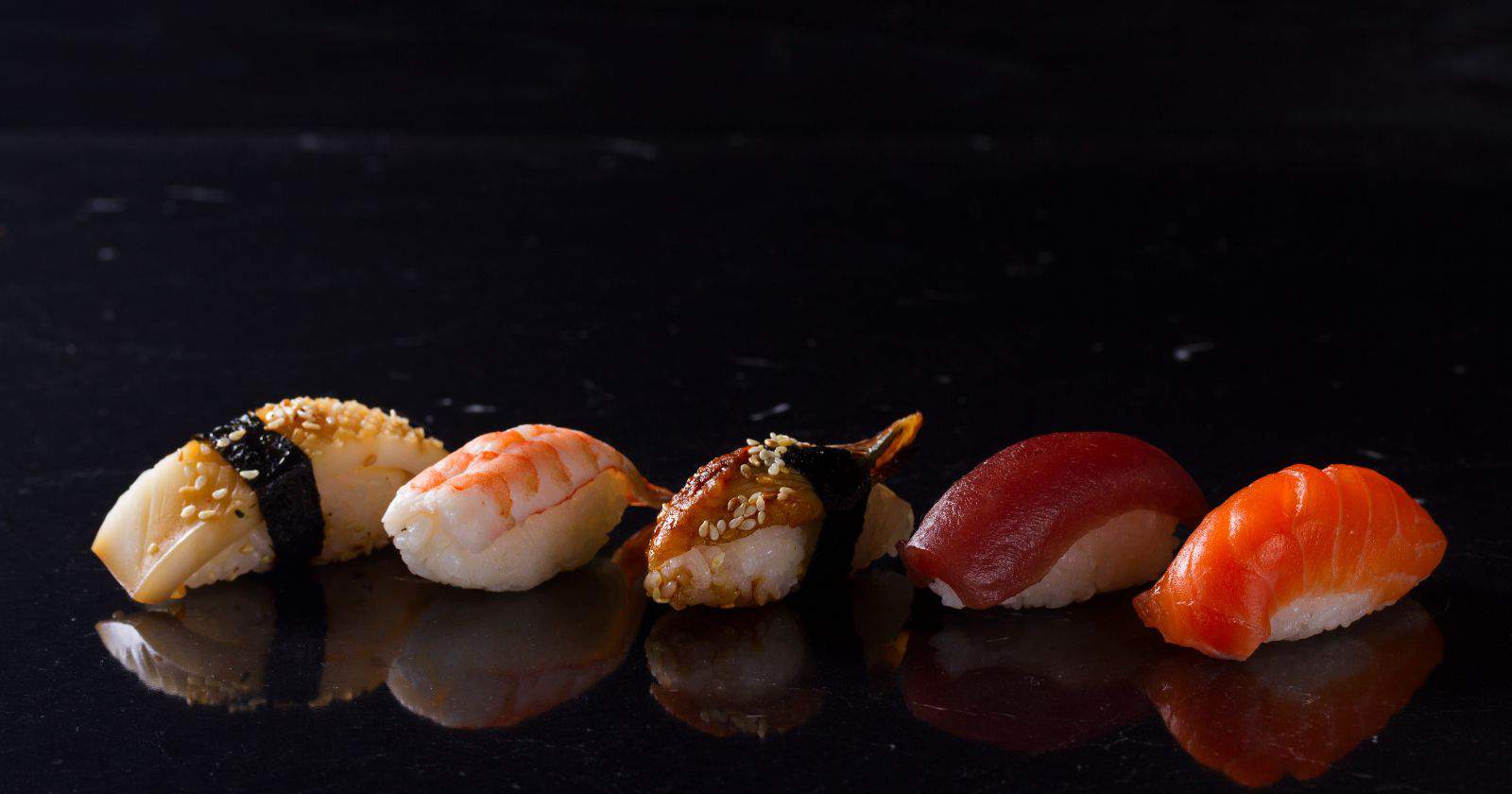
Assorted shellfish-free sushi rolls including vegetable and cooked protein options without shellfish

Dozens of delicious sushi without shellfish options exist beyond the obvious vegetable rolls. Fish-based rolls using salmon, tuna, and eel deliver satisfying protein without any crustacean or mollusk content.

Fish-Based Rolls Without Shellfish

Salmon rolls rank among the safest and most popular choices. Tuna rolls, including spicy tuna variations, contain zero shellfish when prepared properly. Yellowtail (hamachi) offers a buttery texture completely free of allergens.

  • Salmon nigiri and rolls: Rich omega-3 content, naturally shellfish-free
  • Tuna rolls: Includes spicy tuna, tuna avocado, and tuna cucumber variations
  • Unagi (freshwater eel): Always cooked, brushed with sweet soy glaze
  • Yellowtail rolls: Buttery flavor, often paired with jalapeño or scallion
  • Mackerel (saba): Strong flavor, traditionally served as nigiri
  • Snapper (tai): Mild, delicate taste perfect for sashimi

The Philadelphia roll deserves special mention. Smoked salmon, cream cheese, and cucumber create a creamy, satisfying roll without any shellfish concerns. Request it at virtually any sushi restaurant with confidence.

Vegetarian and Vegan Sushi Options

Plant-based rolls eliminate shellfish worries entirely while delivering surprising depth of flavor.

Roll Type Main Ingredients Flavor Profile
Avocado Roll Avocado, rice, nori Creamy, mild
Kappa Maki Cucumber, rice, nori Crisp, refreshing
Sweet Potato Roll Tempura sweet potato Sweet, crunchy
Asparagus Roll Grilled asparagus Earthy, tender
Shiitake Roll Seasoned mushrooms Umami-rich

Inari sushi offers a completely different experience. Sweet, seasoned tofu pouches filled with sushi rice provide satisfying texture and natural sweetness. These require no special preparation requests since they contain zero seafood of any kind.

Specialty Rolls to Request

Dragon rolls typically feature shrimp, but requesting eel substitution creates a stunning shellfish-free alternative. The eel drapes across the top like dragon scales, delivering rich flavor without allergen concerns.

Ask your server about bagel rolls featuring smoked salmon and cream cheese. These fusion creations honor the classic New York combination while staying completely safe. Many restaurants accommodate custom roll requests, building combinations around your specific restrictions.

Understanding sushi terminology helps. Nigiri places fish atop rice. Sashimi means sliced fish alone. Maki refers to rolled sushi. Ordering salmon nigiri or tuna sashimi leaves no ambiguity about ingredients.

How to Order Sushi Safely With a Shellfish Allergy

Successful allergy-friendly sushi dining starts before you sit down. Calling ahead allows kitchens to prepare for your needs and signals serious commitment to your safety.

Questions to Ask Your Server

Direct questions yield direct answers. Vague inquiries about “allergen menus” waste time and create confusion.

  • “Does your restaurant have a shellfish allergy protocol?”
  • “Are shellfish and non-shellfish items prepared on separate surfaces?”
  • “What brand of imitation crab do you use, and does it contain shellfish extract?”
  • “Which sauces contain shellfish or shellfish derivatives?”
  • “Can the chef prepare my order with clean utensils and a clean cutting board?”

Servers who hesitate or seem uncertain warrant caution. Confident, specific answers indicate proper training and genuine allergen awareness.

Cross-Contamination Concerns

Sushi bars present unique cross-contamination challenges. Chefs handle multiple ingredients simultaneously. Knives move between shellfish and fish without washing. Rice sits in communal containers touched by contaminated hands.

Requesting separate preparation adds time but dramatically reduces risk. Some restaurants maintain dedicated allergen-safe preparation areas. Others simply cannot accommodate severe allergies safely. Knowing which situation you face determines whether to stay or leave.

Watch for red flags during your visit. Cramped preparation spaces, rushed staff, and dismissive responses to questions all signal elevated risk. Trust your instincts when something feels wrong.

Restaurant Communication Strategies

Start the conversation with clear language: “I have a severe shellfish allergy that includes shrimp, crab, lobster, and all crustaceans.” Repeating this to both the server and the chef eliminates miscommunication.

Many diners carry printed allergy cards in multiple languages. Japanese restaurants particularly appreciate cards written in Japanese, ensuring kitchen staff understand without translation barriers. Allergic Living recommends this approach for international cuisines.

Imitation Crab and Surimi: Is It Safe for Shellfish Allergies?

Crab-free sushi sounds straightforward until imitation crab enters the equation. This processed product starts as white fish, typically Alaska pollock or Pacific whiting, then undergoes extensive transformation.

Manufacturers debone, wash, and mince the fish into paste. Starches, egg whites, sugar, and salt join the mixture. Here’s where problems begin: many brands add crab extract or crustacean shellfish flavoring to achieve authentic crab taste.

California rolls represent the biggest gamble. Some restaurants use surimi brands free of shellfish derivatives. Others stock products listing “crustacean shellfish (snow crab)” among ingredients. Without checking the specific brand, you simply cannot know.

Trident Seafoods lists crustacean shellfish in their popular surimi products. Other brands omit shellfish entirely. Restaurant staff often lack knowledge about which brand their distributor provides. When in doubt, avoid California rolls completely.

Simply Surimi and similar products require ingredient verification every single time. Formulations change. Suppliers switch. Yesterday’s safe product becomes today’s allergic reaction. Always ask rather than assuming past safety guarantees future safety.

Best Sushi Restaurants in Des Moines for Allergy-Friendly Dining

Des Moines offers several sushi restaurants with strong allergen awareness, though individual experiences vary based on staffing and kitchen conditions during your visit.

Restaurants With Strong Allergen Protocols

Blue Sushi Sake Grill emphasizes sustainable sourcing and maintains documented allergen procedures. Their staff receives specific training on common allergies, and the kitchen accommodates separate preparation requests. Calling ahead ensures the shift manager knows about your visit.

Sakari Sushi Lounge on Ingersoll Avenue earns consistent praise for attentive service and fresh ingredients. Reviewers frequently mention staff willingness to discuss ingredients and preparation methods in detail.

Restaurant Address Allergy Accommodation Level Notes
Blue Sushi Sake Grill Multiple locations High Documented protocols
Sakari Sushi Lounge Ingersoll Avenue Medium-High Attentive staff
Akebono 515 Downtown Medium Traditional menu
W-Tao Sushi Des Moines Medium Verify upon arrival
Oh Sushi Des Moines Varies Call ahead

What to Look For in an Allergy-Conscious Sushi Spot

Fresh ingredients and clean preparation areas indicate overall quality and attention to detail. Restaurants prioritizing food safety generally handle allergies more carefully than those cutting corners elsewhere.

Read recent Yelp and TripAdvisor reviews specifically mentioning allergy accommodations. Search terms like “allergy friendly” or “shellfish” reveal relevant experiences from fellow diners. One-star reviews mentioning dismissed allergy concerns deserve serious weight.

Warm atmosphere matters less than kitchen organization. A spotless, well-organized sushi bar where chefs work methodically suggests disciplined food handling. Chaotic preparation with ingredients scattered everywhere raises contamination concerns regardless of how friendly the staff appears.

Making Shellfish-Free Sushi at Home

Home preparation eliminates every cross-contamination concern while saving significant money. Complete ingredient control means absolute certainty about what enters your body.

Essential Ingredients and Equipment

Start with proper sushi rice, a short-grain Japanese variety distinctly different from long-grain alternatives. Season cooked rice with rice vinegar, sugar, and salt for authentic flavor.

  • Bamboo rolling mat: Essential for tight, even rolls
  • Sharp knife: Wet blade between cuts for clean slices
  • Nori sheets: Toasted seaweed wrappers
  • Rice paddle: Prevents crushing delicate grains
  • Small bowl of water: Keeps hands from sticking to rice

Sushi-grade fish requires careful sourcing. Reputable fishmongers and specialty Asian markets sell properly handled fish safe for raw consumption. Frozen fish often proves safer than “fresh” options sitting at uncertain temperatures. Ask your fishmonger directly about sourcing and handling.

Easy Recipes to Start With

Salmon avocado rolls provide ideal beginner practice. Spread rice on nori, add sliced salmon and avocado strips, roll tightly using the bamboo mat, and slice into eight pieces.

Cucumber rolls (kappa maki) require only three ingredients: rice, nori, and julienned cucumber. These simple rolls develop your technique without expensive fish while producing refreshing, crisp results.

Spicy tuna rolls using canned tuna offer budget-friendly practice. Mix drained tuna with spicy mayo (make your own using mayo and sriracha to avoid shellfish concerns in commercial versions). Roll and slice as usual.

Store finished sushi in airtight containers for no more than 24 hours. Rice texture degrades significantly after refrigeration, so plan to consume homemade sushi within a few hours for optimal quality. My Pure Plants emphasizes that homemade sushi allows complete dietary customization impossible at restaurants.

Nutritional Benefits of Shellfish-Free Sushi Options

Non-shellfish sushi delivers impressive nutritional value, particularly when featuring fatty fish like salmon and tuna. These options often provide superior health benefits compared to shellfish-based alternatives.

Salmon delivers approximately 22 grams of protein per serving alongside abundant omega-3 fatty acids. These essential fats support cardiovascular health, reduce inflammation, and benefit brain function. Tuna provides even higher protein content at roughly 24 grams per serving.

Fish Type Protein (per serving) Omega-3 Content Additional Benefits
Salmon 22g Very High Vitamin D, B12
Tuna 24g High Selenium, niacin
Yellowtail 20g Moderate Low mercury
Eel 18g Moderate Vitamin A
Mackerel 19g Very High Heart-healthy fats

Vegetable rolls contribute dietary fiber often missing from protein-heavy diets. Avocado provides potassium, vitamin E, and healthy monounsaturated fats. Cucumber adds hydration and antioxidants with minimal calories.

Gluten-free sushi requires avoiding soy sauce (which contains wheat) in favor of tamari. Low-carb options include sashimi and naruto rolls wrapped in cucumber rather than rice. WebMD confirms that omega-3s in sushi help reduce chronic inflammation linked to serious diseases.

A typical eight-piece fish roll contains roughly 200-250 calories, making sushi an excellent choice for calorie-conscious diners seeking satisfying, nutrient-dense meals.

FAQ

Does all imitation crab contain shellfish?

Not all imitation crab contains shellfish, but many brands include crab extract or shellfish flavoring. Ingredients vary significantly between manufacturers. Always verify the specific brand used before consuming any product labeled as imitation crab or surimi.

Is eel (unagi) safe for shellfish allergies?

Yes, eel is a fish, not a shellfish. Freshwater eel (unagi) and saltwater eel (anago) both belong to the fish family and contain zero crustacean or mollusk content. The sweet soy glaze used on eel typically contains no shellfish ingredients.

Are fish eggs (roe) safe for people with shellfish allergies?

Fish roe itself contains no shellfish. However, cross-contamination remains possible during preparation, especially at busy sushi bars where multiple ingredients share surfaces. Ask about preparation practices before ordering items topped with roe.

What Japanese words should I know for shellfish at sushi restaurants?

Ebi means shrimp. Kani means crab. Hotate means scallop. Tako refers to octopus (a mollusk). Memorizing these four terms helps identify shellfish items on menus without English translations or when servers use Japanese terminology.

How do I know if a sushi restaurant takes allergies seriously?

Staff who answer allergy questions confidently and specifically demonstrate proper training. Willingness to check ingredient labels, consult with chefs, and accommodate separate preparation requests signals genuine commitment. Hesitation, dismissiveness, or vague responses indicate potential risk.

Is octopus considered shellfish?

Yes, octopus is a mollusk and therefore classified as shellfish. People with shellfish allergies should avoid tako (octopus) along with squid (ika), which also belongs to the mollusk family despite appearing similar to fish in texture.

Are miso soup and edamame safe shellfish-free appetizers?

Miso soup occasionally contains shellfish-based dashi (fish stock), so ask before ordering. Edamame (steamed soybeans) is completely plant-based and safe for shellfish allergies. Both make excellent safe sushi options when verified.

What’s the safest sushi order for someone newly diagnosed with shellfish allergy?

Start with salmon nigiri or a simple tuna roll. These options contain single ingredients prepared with minimal handling. Avoid anything fried (cross-contamination in oil), sauce-topped, or containing multiple ingredients until you develop confidence communicating with sushi restaurants.

Share your love
Bill Kalkumnerd
Bill Kalkumnerd

I am Bill, I am the Owner of HappySpicyHour, a website devoted to spicy food lovers like me. Ramen and Som-tum (Papaya Salad) are two of my favorite spicy dishes. Spicy food is more than a passion for me - it's my life! For more information about this site Click

Leave a Reply

Your email address will not be published. Required fields are marked *